Our first batch of seeds has been planted!

Projects actively underway.
Indigenous Homecoming Week An annual invitation to return, reconnect, and celebrate Indigenous culture. Goal: To establish an annual tradition that strengthens the living relationship between Chattanoogans and the Indigenous peoples whose ancestors called this land home. Indigenous Homecoming Week is a new annual gathering that invites Indigenous peoples to return to their ancestral homeland in present-day Chattanooga for a week of connection, culture, remembrance, and celebration. Beginning in 2027, the vision is to welcome members of the Cherokee and other Indigenous nations with historic ties to this region for a week of traditional art, music, dance, games, storytelling, food, educational programs, and opportunities for private cultural and ceremonial gatherings. The Homecoming seeks to honor the living traditions of Indigenous communities while building lasting relationships with the people of Chattanooga. More than a festival, it is an opportunity to reconnect with place, learn from one another, and establish an annual tradition rooted in respect, hospitality, and the shared stewardship of the land.
The Litter Bit Louder Tour is all about cleaning our community one neighborhood (and song) at a time. This project invites everyone to tidy up the city and have fun while doing it! Connect with other residents and help keep trash off of our streets while a DJ plays your favorite tunes. It's a mobile, intentional party for the whole block. Speaking of blocks, why not celebrate a job well done with a block party? At the last stop of each tour, everyone is welcome to meet us at the final neighborhood park for clean views, local food trucks, and live entertainment where you're the star. That's right, we're putting the "Care" in Care-aoke!
Picture this: it's a warm, sunny day in Chattanooga, and you're out paddling the Tennessee River. There's a gentle breeze in the air, and the water is gently lapping against the sides of your boat. You pass by the downtown Riverfront and Coolidge Park and head towards Maclellan Island--a uniquely wild nature sanctuary in the middle of Chattanooga's downtown core. You decide this is the perfect place to rest and enjoy your packed lunch. You dock your kayak and walk ashore, and notice a beautiful, woodland path, lined with gorgeous native ferns, flowers, and trees. A wooden sign greets you: "This way to Paddlers' Rest". You wander down the meandering path, enjoying the beautiful woodland garden path, and discover a gazebo in the middle of the woods. The gazebo sits in a small clearing, surrounded by beautiful woodland gardens and native plants. The warm breeze blows through the gazebo, and you sit down on the bench, enjoying your lunch, the gardens, and the sounds of nature and the river. We propose a collaboration between us, the Chattanooga Botanical Garden, and the Chattanooga Audubon Society to build a mini woodland garden at Maclellan Island! We hope this project will help bring new attention to Maclellan Island, especially with the increasing risk of losing the island and its history to erosion. This project will also serve as a catalyst to bring a botanical garden to Chattanooga by showing the community and our city what we could be capable of! This proposed garden could become the first stepping stone to saving Maclellan Island and building something unique there in the years to come. Maclellan Island is a large island in the middle of the Tennessee River, located in the heart of Chattanooga's downtown and tourism sectors. It's quite the unique gift to Chattanooga; what other city has a nature preserve island in the middle of their downtown core? Maclellan Island supports many species of flora and fauna, and serves as a rich Native American archeological and historical site. Unfortunately, due to dams upstream and boat wake along the river, Maclellan Island is losing shoreline at a rate of an acre per decade. Maclellan Island is hoping to secure grant funding to stabilize the shoreline all the way around the island, and we hope that some increased activity on the island will strengthen the case for funding. If nothing is done to save the island, we are losing a crucial piece of Chattanooga's history and natural environment for the generations to come. Furthermore, this garden could be the first step in building something completely unique and new on Maclellan island in the years to come! The Chattanooga Botanical Garden is a newly formed nonprofit group looking to build a botanical garden in Chattanooga, and we hope that this project will help shine a spotlight on our mission. We want to create a mini garden for people in Chattanooga to enjoy now while we work on building the big one--but we also hope this puts us on the radar for securing our own grants to make those things possible! We hope this collaboration will be another first stepping stone in creating something beautiful for Chattanoogans, and continued partnerships with the Audubon Society in the future. Don't worry -- a crucial part of both ChattBG's and the Audubon Society's mission is stewardship of the natural environment and resources -- so we would not be building or planting anything that would disrupt the natural wildness of Maclellan Island! We plan to landscape with native plants and other plants that highlight the natural beauty of the island. We definitely would not be planting any invasive species! Our paths and gazebo will be constructed of natural materials that are designed to blend back into their surroundings. We plan to partner with Foxwood Gardens, a local garden design company that specializes in holistic and native gardening, to design the woodland garden. We also plan to pull in local craftsmen and carpenters to construct the gazebo. The gazebo would be open air, about 20' in diameter, and have a bench wrapping around the interior, providing plenty of room for people to come out and sit. Between both ChattBG and Audubon Society, we have a vigorous group of supporters and volunteers that would assist with installation of the gardens and periodical maintenance! The garden at Paddlers' Rest would be the first stepping stone in creating something beautiful for Chattanooga to enjoy for the years to come. We hope this project will become a catalyst for both the Chattanooga Botanical Garden, but also the Chattanooga Audubon Society and even Maclellan Island. Who knows... this could be the start of something really beautiful being made at the island! Most importantly, we want to ensure that Maclellan Island is protected for years and years to come, and we hope this will be a small piece of that puzzle.
The famous Maclellan Island goats are making their return to the island this June, and you’re invited to be part of the adventure! Chattanooga Audubon Society is thrilled to partner with Chattanooga Riverboat Company and National Park City to launch Maclellan Island Eco Tours, an unforgettable guided experience on the Tennessee River. Known around the world from features in the New York Times, CNN, CBS, and Backpacker Magazine, the Maclellan Island goats have become local legends for their important conservation work. These lovable goats help control invasive plant species that threaten the island’s native habitat and ecological health. Now, guests can travel by boat from downtown Chattanooga to one of the Tennessee River’s most remarkable hidden natural areas for a guided eco tour led by experienced naturalists. Along the way, visitors will learn about the island’s rich history, native plants and wildlife, ongoing conservation and erosion challenges, and the important role the goats play in restoring the landscape. Of course, the highlight of the experience is meeting the island’s beloved goats (and their guardian dog!) in person. To safely return the goats to the island, we are raising funds for critical needs including protective fencing and security cameras to help guard against predators like coyotes, veterinary care, transportation logistics, and ongoing boat access for caretakers traveling to and from the island. Every tour and donation directly supports the goats’ safe return and continued conservation efforts on Maclellan Island. Maclellan Island Eco Tours include a short guided hike of approximately one mile over dirt trails. Guests are encouraged to wear appropriate footwear and bring water. Restrooms are available aboard the boat and at composting facilities on the island. Photos provided by Will Crooks (NY Times) and Views From Above
Overview World Fair Chattanooga is a community-driven initiative that brings Chattanooga residents together through monthly celebrations of international festivals, combining food, culture, and intentional learning experiences. Each gathering is inspired by a cultural tradition from one of the city’s diverse communities and is designed not only to celebrate, but also to educate and foster meaningful connections. In addition to global festivals, the initiative also reimagines American traditions, such as Thanksgiving; as inclusive, shared experiences where international communities can participate, contribute, and feel a sense of belonging The Need As Chattanooga continues to grow and diversify, there remains a gap between coexisting and truly connecting across cultures. Many international communities are underrepresented in public spaces, and opportunities to learn about traditions, histories, and lived experiences are often limited or surface-level. At the same time, residents are seeking more meaningful, human-centered ways to engage with their city and with one another. This initiative responds to that need by creating intentional spaces where cultural exchange is accessible, welcoming, and rooted in shared experience. The Idea This initiative establishes a city-wide series of festival-inspired gatherings, where each event highlights a different cultural celebration such as Holi, Diwali, Día de los Muertos, Tết, and Central American independence festivals. Alongside these, a special community-centered Thanksgiving gathering is introduced as a space where international residents can experience and reinterpret an American tradition through their own cultural lens. This creates a two-way exchange—celebrating global festivals while also making local traditions more inclusive and representative of the city’s diversity. How It Works Cultural gatherings are organized in collaboration with community members who wish to share their traditions. Each event centers around a festival and is brought to life through food, storytelling, and interactive experiences. Traditional dishes are served with context about their significance, and a storytelling element introduces attendees to the meaning and history behind the celebration. Interactive components—such as music, crafts, or cultural practices—encourage participation in a way that feels approachable and respectful. The initiative grows through partnerships and participation, allowing events to take shape based on interest, availability, and cultural relevance rather than a predetermined schedule. Impact on the City World Fair Chattanooga contributes to Chattanooga’s growth as an inclusive and connected city by creating opportunities for meaningful cultural exchange. It enhances cultural understanding by allowing residents to experience traditions beyond surface-level exposure, fostering empathy and awareness. The inclusion of Thanksgiving as a shared, cross-cultural celebration helps bridge the gap between local and international communities, allowing newcomers to feel included in American traditions while also expanding those traditions to reflect the city’s diversity. The initiative strengthens community connections by bringing together individuals from different backgrounds in a shared, welcoming environment. It also supports inclusive representation by giving international communities a platform to share their identities and traditions authentically. Additionally, by activating public spaces with purposeful programming, the initiative contributes to the vibrancy and cultural richness of the city.
Chattanooga's Walnut Street Bridge is already one of the city's most beloved public spaces. It’s a place where people walk, pause, and take in the river. "Chatt Spots" turns one bench on that bridge into something more: a visible, low-barrier point of connection for anyone who could use a conversation about their mental health. This is not therapy. It's a painted bench, distinct from the others, staffed by trained community members who can offer evidence-based guidance, connect people to local behavioral health and social resources, or simply be present when someone needs to talk. The bench operates on a simple insight backed by a growing body of global evidence: that brief, accessible, human conversations in familiar public spaces can reduce distress, increase help-seeking, and bridge the gap between struggling alone and getting support. The bridge is both a metaphor and the setting for our plan. The idea draws from several evidence-based traditions. Community-based peer support models, including the Friendship Bench program originating in Zimbabwe, which demonstrated that trained lay health workers delivering problem-solving therapy on public benches significantly reduced symptoms of depression and anxiety and showed that non-clinical conversation in everyday settings can produce meaningful outcomes. Research on community health workers, peer support specialists, and "everyday helpers" consistently finds that people are more likely to engage with someone who feels approachable and embedded in community life than with a formal clinical referral. People that look like them, talk like them, and know their unique community context. The evidence also shows that the physical environment matters: nature, water, open air, and movement all reduce cortisol and support emotional regulation making a pedestrian bridge over the Tennessee River an ideal setting. The "Chatt Spots" bench would be visually distinct, painted in a way that signals its purpose without clinical branding. Think warm, inviting, maybe a little playful. We could have signage on the bench, "Want to Chatt?" The name itself does the work: it's a question, an invitation, and a nod to the city all at once. Signage would make the purpose clear: "This bench is here for you. Sit down if you want to talk about how you're feeling. No appointment. No cost. No judgment." Staffing would draw on Chattanooga's existing networks of trained peer support specialists, community health workers, faith-based counselors, and mental health first aid graduates. Volunteers and paid staff would rotate shifts during peak bridge hours (evenings, weekends, lunch hours). Training would cover active listening, psychological first aid, motivational interviewing basics, safety planning, and warm handoffs to local resources including the crisis hotline (988), community mental health centers, and Hamilton County's behavioral health services. The bench also serves as a connective node in a broader ecosystem. It can distribute resource cards, QR-coded links to self-guided tools, and information about local support groups, food banks, housing assistance, and substance use services. For people who aren't ready to call a hotline or walk into a clinic, the bench is the lowest possible threshold; you're just sitting down on a bridge you were already crossing. This seed aligns with National Park City principles in a direct way: it uses a beloved public natural space to improve quality of life and human connection. It treats the Walnut Street Bridge not just as infrastructure or scenery but as a civic commons, a place where nature, community, and care intersect. And it embeds health in the fabric of everyday life rather than sequestering it behind clinic doors. We're starting small. The first phase is a 10-week Saturday pilot with two trained volunteers, one painted bench, four hours a week. The goal is to test whether people will sit down, what they need, and whether the bridge works as a setting. That gives us real encounter data to take to funders and the city for a full-year program. The model is scalable. If "Chatt Spots" works on the Walnut Street Bridge, the concept can expand to other public spaces, Coolidge Park, Renaissance Park, the Riverwalk, creating a distributed network of visible, accessible mental health touchpoints across the city. Chattanooga becomes not just a National Park City but a city where the landscape itself supports emotional well-being.
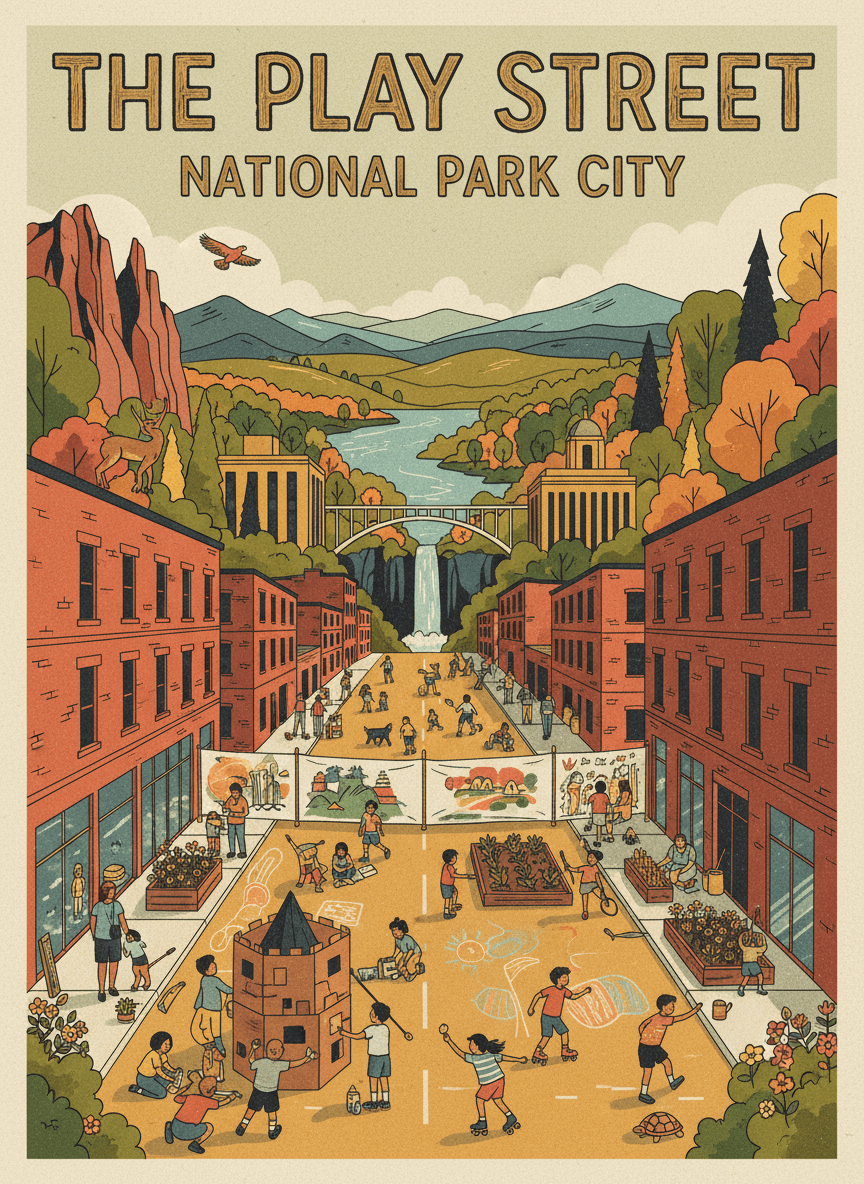
At Creative Discovery Museum, we believe children are not just future citizens, they are active contributors to the communities they call home today. As Chattanooga fulfills its vision of becoming a National Park City, CDM invites our youngest residents to help imagine what that future could look like. “Chattanooga Kids Imagine Their National Park City” centers children and families in reimagining shared spaces through play, creativity, and exploration. Inside the Museum, families will participate in hands-on Creation Station activations where children can draw, build, and share their ideas for a better Chattanooga. Using open-ended prompts like “What would you add to your city?” and “How can we take care of our parks and places?”, children will express ideas through art and collaborative building. These contributions will form a visible, evolving collection of community-inspired ideas. This playful process introduces civic engagement in an accessible, meaningful way—encouraging children to see themselves as creators of change. In September, these ideas will extend beyond the Museum through Play Street: A National Park City for Kids, a temporary transformation of the street in front of the Museum into a child-centered public space. By closing the block to traffic, we will reimagine how a city street can function as a place for play, creativity, and connection. Inspired by children’s ideas, the Play Street will feature flexible, hands-on zones for building, art-making, nature exploration, and movement. Designed as an open, welcoming environment rather than a programmed event, it invites families to gather, play, and experience a version of their city that prioritizes people over cars. This project connects children’s imagination to real-world experience, demonstrating how public space can be reimagined through a child-centered lens.
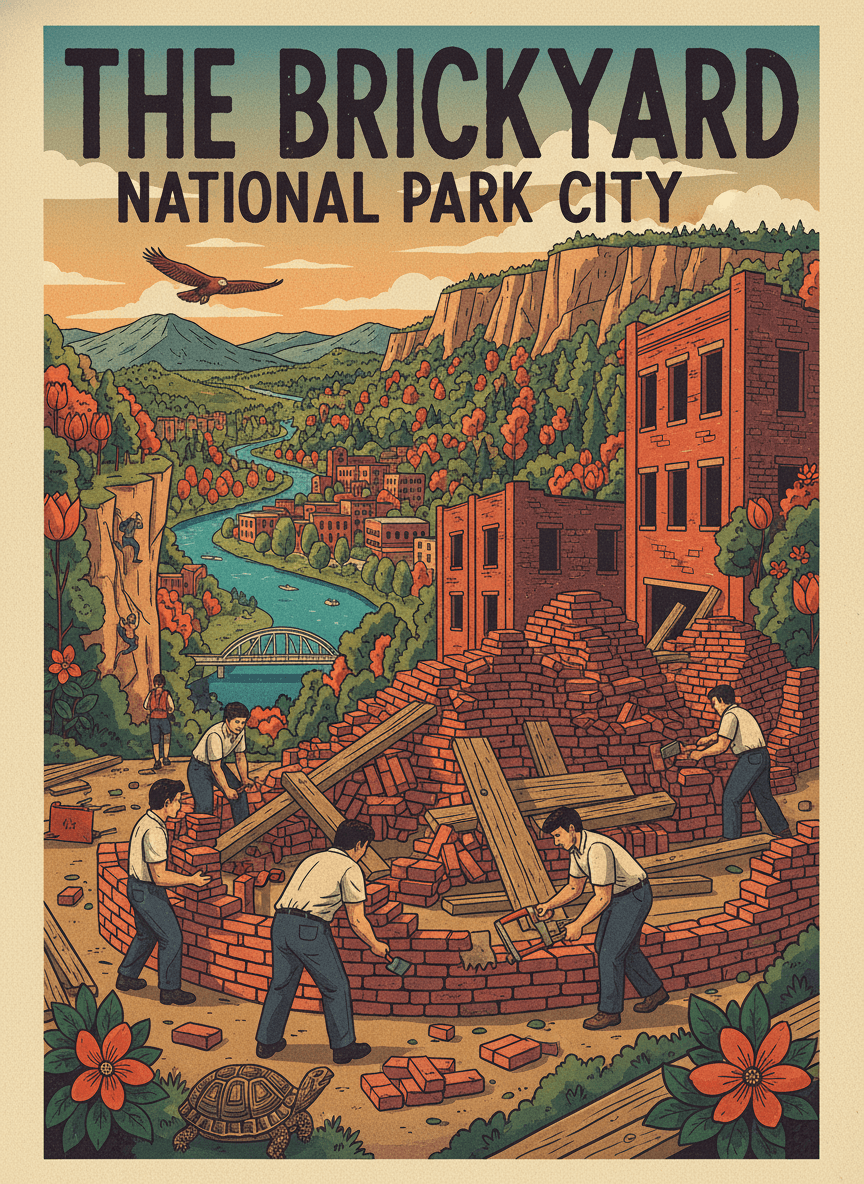
During the last three years, with the work of the Deconstruction Advisory Board and in collaboration with caring community partners, some of Chattanooga's oldest lumber and bricks have been saved from the landfill. Some are the only physical remains we have of entire historic buildings that have been erased from our landscape. Some are precious pieces of our past that can retell the Chattanooga story. It is time, in America's First National Park City, for the aged beauty of these reclaimed materials to make their entrance out of storage and into the present - at the Brickyard. The Brickyard is located in an outdoor space. Imagine it as a garden to our past where history is reborn; where artists and craftspeople use their talents and skills to thoughtfully transform our historic brick and lumber into scenic exhibits and a playspace unlike any other. Impossible to duplicate as every brick and every board is a work of art in itself and where the only limitation will be your imagination!
Construct a floating dock at the base of the Hunter bluff and bolt 50+ world class sport routes on the Hunter bluff and create a world class sport crag downtown with observation viewing areas on walnut bridge. Building a dock would create 25x the number of routes, open the cliff to all skill levels, reduce risk / liability through use of protection bolts and safety ropes, reduce misuse and trashing of area, generate spectacle, provide access control and potentially generate revenue through dock rentals/ day use, events, etc. I have traveled the world for climbing for the last 30 yrs, and I have never encountered elsewhere some of the limestone features found on the Hunter bluff. I have climbed on the Hunter bluff for the last 30 yrs often accessed by boat or a footpath often choked with trash. Deep water soloing ( climbing without ropes over water) is a unique experience but this this cliff creates challenges for DWS due to the underwater debris (see old iron beams), snags, and shallows. For this reason, climbing on the hunter bluff has traditionally limited to low traversing with a few daring vertical routes that go un-repeated and under appreciated.
Orienteering is a combination of puzzle solving and an Easter Egg hunt. Simply put, it is using tools to efficiently find your way through an outdoor maze to unlock new discoveries and new experiences. Urban orienteering just means that the maze is in a city and its surrounding areas. It offers a unique and enriching experience that brings families, neighborhoods, and children together in meaningful ways. For families, it creates opportunities for shared adventure and teamwork, encouraging parents and children to collaborate, problem-solve, and communicate as they navigate their surroundings together. For children in particular, it builds a range of valuable skills — from map-reading and spatial awareness to confidence and independence — all while keeping them physically active and mentally engaged. Beyond the family unit, urban orienteering fosters a deeper sense of connection to the local neighborhoods, as participants discover hidden gems, historical landmarks, and community spaces they might otherwise overlook. It encourages people of all ages and fitness levels to explore their city on foot, promoting inclusivity and a shared sense of belonging. In this way, urban orienteering transforms ordinary streets into a living classroom and playground, strengthening community bonds one course at a time. Courses can focus on various parts of the communities and both the natural and man-made aspects of them. Maps would be made available (physical maps as well as digital maps for phone usage) showcasing various courses in the Chattanooga area. Each course would consist of several orienteering points (O-Points). Participants would use the maps to navigate to each of the O-Points on the course as efficiently as possible. Some ideas for courses are as follows: + Neighborhood-O: Partnering with neighborhood associations, each neighborhood could sponsor their own orienteering course that features points of interest in their area. + Bridge-O: The downtown bridges are an iconic part of Chattanooga, full of history and engineering. + Art-O: Public art is a big part of the Chattanooga area and, often, ignored. + History-O: History is everywhere waiting to be uncovered. + Architecture-O: Interesting and historic buildings dot the Chattanooga area. + UTC-O: This large campus is a perfect place for urban orienteering + Park-O: Stringers Ridge would serve as a perfect bridge between urban orienteering and the outdoor sport of Orienteering that typically takes place in larger wooded domains. Orienteering classes can be held and an orienteering club could be launched to put on events. Free phone apps, such as Strava, can be used to "gamify" the orienteering courses and create competitions. Thriving orienteering clubs exist in the Atlanta, Nashville and Birmingham areas.
Chattanooga has built a reputation as an outdoor destination, but for many residents, the true entry point into mountain biking is still missing. You can access incredible trails, but for a beginner they often feel intimidating, technical, and unforgiving. For some, that intimidation is enough to never try—missing out on the 100+ miles of singletrack within 30 minutes of downtown. For others, the opposite happens: they jump in too quickly, get in over their head, and have a negative or even unsafe first experience. Both outcomes lead to the same result: people disengage before they ever experience the joy of riding the mountains surrounding Chattanooga. At the same time, Chattanooga’s parks and pathways are full of people already riding bikes. These spaces are accessible, familiar, and used every day—but they are not designed to help riders safely build the skills and confidence needed to progress to natural trails. This project fills that gap. From Sidewalk to Singletrack is a simple way to introduce more people to mountain biking by adding approachable features in parks and along pathways, anchored by a welcoming, beginner-focused bike park. As a first step, we have identified a Hamilton County-owned site along the Riverwalk as an ideal pilot location. This site is uniquely positioned: it is accessible, already heavily used, and offers gentle terrain that is perfect for introducing riders to the fundamentals of mountain biking. At the heart of this pilot is a Welcome Hub kiosk—a simple but powerful idea. Someone walking or riding along the Riverwalk can stop, look at a map, and think: “I’ve always wanted to try mountain biking…” From there, the path forward is clear: - Learn the basics on-site using natural-surface flow trails and small features - Build confidence on a small asphalt pump track designed for all ages - Discover nearby beginner-friendly trails and know exactly where to go next The goal is simple: Ride something here, then go ride somewhere bigger. This pilot site becomes more than just a park—it becomes a gateway to Chattanooga’s entire trail network. By starting with a modest, highly visible project, we can: Lower the barrier to entry Introduce new riders in a safe, welcoming environment Build momentum and community support That momentum sets the stage for a future full-scale regional bike park on a larger parcel of land. Other cities like Knoxville, Bentonville, Asheville, Nashville, and Austin have shown that accessible bike infrastructure sparks participation, builds community, and grows a culture of riding. Chattanooga already has the trails. This project creates the front door. A place where someone can stumble upon it, hop on a bike, and think: “Oh… I can do this.” And from there, begin exploring everything our region has to offer.
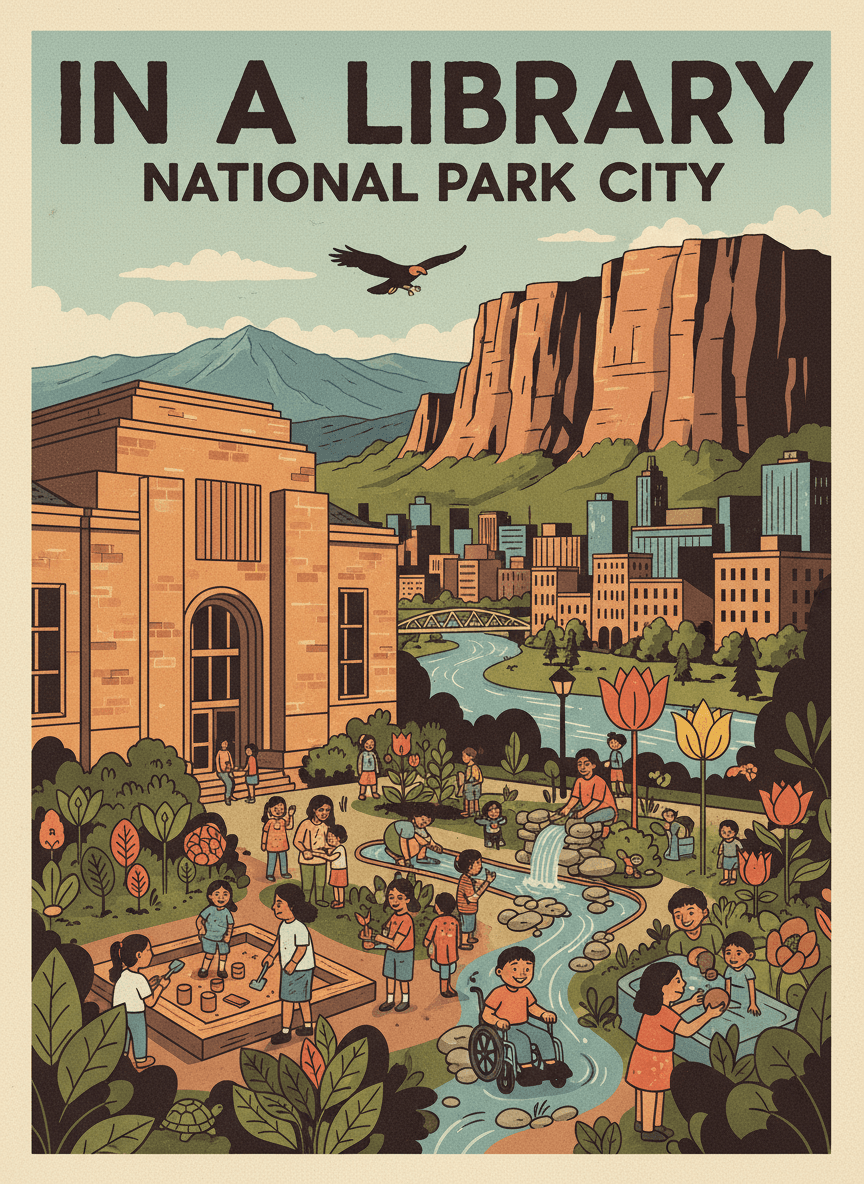
We propose creating a small, intentional pocket park at the downtown library, designed for, but not limited to, children ages 0–5 and their caregivers. The space would prioritize sensory play and accessibility, ensuring all children and families can engage meaningfully in a compact urban setting. In the heart of Chattanooga’s urban core, this space would provide a safe, playful, and accessible outdoor environment in what is otherwise a concrete-heavy area. It would extend the library’s role as a community anchor by seamlessly connecting indoor early learning spaces with a dedicated outdoor play experience. This pocket park would: Expand access to nature and play for young children downtown Support early childhood development through unstructured, sensory-rich outdoor exploration Create a welcoming, family-friendly destination in the city center Demonstrate how small, thoughtfully designed green spaces can have outsized community impact By pairing an already vibrant indoor library experience with an intentional outdoor space, this project embodies the spirit of a National Park City (bringing nature, play, and community into everyday urban life). This project aligns with One Chattanooga by ensuring that all families, regardless of background or neighborhood, have access to safe, high-quality spaces for play, learning, and connection in the heart of our city.
On warm evenings in Chattanooga, the riverfront becomes more than just a place to walk — it becomes a place to move. ChattaLatin Riverfront Social is a free outdoor salsa and bachata dance gathering held at Coolidge Park and other public spaces along the Tennessee River. With music playing and the river as a backdrop, dancers of all levels — from beginners to experienced — are invited to come together and share the joy of Latin dance. The idea is simple: create a recurring space where people can dance, connect, and experience culture in one of Chattanooga’s most beautiful public places. A short beginner-friendly lesson at the start of the evening invites anyone passing by to join, even if they’ve never danced before. Afterward, the space becomes an open social dance where the community and visitors alike can participate or simply enjoy the atmosphere. Cities across the country — from Atlanta to Miami to New York — have thriving outdoor Latin dance gatherings that bring energy and connection to public spaces. Chattanooga already has a growing salsa and bachata community through classes, socials, and cultural events. Also, a social media over 600 followers and group chats over 200 dancers/community members. This seed builds on that momentum by bringing the dance floor outside and making it accessible to the entire city. Over time, the vision is for ChattaLatin Riverfront Social to become a recognizable part of Chattanooga’s summer rhythm — a place where music carries across the park, where strangers become dance partners, and where people of all backgrounds come together through movement and culture. By activating public spaces with music, dance, and community participation, the project transforms an ordinary evening at the park into a shared cultural experience that reflects the vibrant and welcoming spirit of Chattanooga.

Chattanooga has great parks, courts, and green spaces that invite people to move, play, and connect outdoors. However, many people arrive at these spaces without the equipment needed to use them. A basketball court without a ball or a field without a frisbee often sits empty even when people are nearby and interested in playing. Maybe they just need a bit of an invitation! This project would install simple community sports gear boxes in selected parks and public recreation areas. Each box would contain shared equipment such as basketballs, soccer balls, frisbees, footballs, jump ropes, and other simple play items. Anyone visiting the park could borrow the equipment during their time there and return it when finished so that others can use it as well. The goal is to reduce barriers to outdoor recreation and make it easier for people to engage with Chattanooga’s parks in active and joyful ways. By making equipment freely available, parks become more welcoming for families, youth, and visitors who may not have brought their own gear or may not have access to it at home. The boxes would operate on a simple trust based system supported by community partners and volunteers. Starting with a small pilot at a few parks would allow the project to test the idea, learn what works best, and build momentum for expanding to additional neighborhoods. Not every piece of equipment will make it back to the box, and that is okay. If it helps more people get outside and play, it is a trade worth making. Over time, these shared play stations could become a recognizable part of Chattanooga’s identity as a National Park City. They would encourage spontaneous play, outdoor movement, and stronger community connections in the places where people gather to enjoy nature.
Lookout Avenue at Georgia Avenue contains a dangerous traffic pattern that creates conflicts between pedestrians, cyclists, and drivers. The slip lane has led to several dangerous altercations in recent years and cuts off access to a recently refurbished memorial fountain honoring Chattanooga’s fallen firefighters. This project proposes a temporary pop-up park that closes the cut-through lane and transforms it into a safe civic space. Using movable planters, AstroTurf, benches, and chairs, the project would test a redesigned traffic pattern while creating new public space next to the courthouse lawn and the memorial fountain. The pilot would improve pedestrian safety, increase access to green space, and reduce the urban heat island effect in a heavily paved downtown area. It would also allow the community and city staff to observe how the intersection functions without the slip lane. If the experiment proves unsuccessful, the street can easily return to its previous configuration. If successful, the project could demonstrate a long-term opportunity to extend the courthouse lawn to the memorial park while improving loading access and creating potential accessible parking. Through a low-cost temporary installation, the project invites Chattanooga to test how a dangerous road could become a safer and more welcoming public space.
Scenic City Starlight Project “Lights Out Chattanooga” Event Light pollution is increasing almost exponentially around the world. Although Chattanooga has made positive changes over the past several decades, our National Park City remains significantly impacted by the harmful effects of over-lighting. Eighty percent of the world’s population lives under sky glow, (including Chattanooga and surrounding cities), which not only reduces our own connection with nature, but it drastically affects wildlife and other living things. In addition, changing our approach to the way we use outdoor lighting can be safer while also providing cost savings. The Scenic City Starlight Project is dedicated to reclaiming the natural heritage of our night sky. We advocate for reducing light pollution through safe, responsible, outdoor lighting to protect our local ecosystem, enhance our community’s well-being, and ensure that the wonders and curiosities of the universe remain visible to every dreamer in the Scenic City. Although future goals of the Scenic City Starlight Project are on a much larger scale, our initial SEED is to host an inaugural “Lights Out Chattanooga” event in the Fall of 2026. Lights Out Chattanooga will be a public star gazing gathering at Greenway Farms where we would work with the park and surrounding neighborhoods, and potentially all of Chattanooga, to turn off all unnecessary exterior lighting for an evening to provide an opportunity for Chattanoogans to experience the benefit of less light pollution. At a predefined time after the sun has set and nighttime begins, the park and surrounding neighborhoods will turn off their lights so the public can witness the immediate impact of seeing the night sky and further connecting us with nature. Once the lights have gone out, the event transitions into a star party! Volunteers with the local Barnard Astronomical Society (BAS) and UTC Clarence T. Jones Observatory (CTJO) will have a variety of different types of telescopes set up for the public to view celestial objects in the night sky. The BAS and CTJO will also have hands-on demonstrations and information about how everyday citizens can take small, positive actions towards darker skies by using responsible lighting. We hope that other local non-profits such as wildlife societies that also have goals of reducing light pollution will join us with providing knowledge about the benefits as well. -------------------------------------------------------------- More about the Scenic City Starlight Project: The goal of promoting darker skies has been an ongoing collaboration between the CTJO and BAS for years, but the birth of this official project is thanks to the development of the National Park City and call for seeds. The plan is for the CTJO to continue to be the hub for dark sky education and resources for the Chattanooga community as it already has an informative display area for reducing over-lighting, holds lectures at the facility about the benefits of darker skies, and has presented planetarium shows about the harmful effects of light pollution. The CTJO is even currently looking into increasing our dark sky example footprint in partnership with our neighbors by replacing lighting at the observatory and nearby buildings in Brainerd. However, the goals of this new Scenic City Starlight Project are to expand our dark sky outreach. Not only by continuing to build on and increase the scale of this initial, and hopefully inaugural, Lights Out Chattanooga event, but also through increased partnerships throughout the city like our current one with Outdoor Chattanooga. How incredible would it be to have the next Lights Out Chattanooga event downtown in Coolidge Park where the city and local businesses work with turning off or dimming lights for an evening? We can’t think of a better way to spark curiosity and a deeper connection to nature in Chattanoogans of all ages. For more information to help you make a decision on supporting dark skies and our Lights Out Chattanooga seed, please visit the BAS website (https://www.barnardastronomy.org/protecting-dark-skies).
Buzz and Blooms connects rescued local, feral honeybee colonies with small-scale growers who need reliable pollination but lack the resources to access it. Across our region, food is being grown in community gardens, homesteads, and small farms, yet pollination is often left to chance. By placing locally adapted bee colonies directly into these spaces, we make pollination intentional, accessible, and regenerative. This helps to increase food production and strengthen local food systems in a practical, grounded way. Here's the seed: we place rescued feral bee colonies at committed community sites across Chattanooga this season. Carmen Joyce, Master Beekeeper behind Nooga Honey Pot (@noogahoneypot), and a collective of emerging beekeepers install, manage, and maintain the hives through fall. She collects local swarms and relocates them, one call at a time. We track pollination activity and garden yield at each site. We install dragonfly habitat poles alongside every hive in partnership with to build an ecosystem and create natural mosquito control. Every site includes native pollinator plantings to support the full spectrum of bees and beneficial insects. And when the bees produce more honey than they need, we harvest it and share it with the host community. In our pilot season, we will launch up to four placement sites, installing and maintaining hives from initial setup through fall management and winter preparation. Our team will track pollination activity and crop yield to measure impact, while also integrating ecological supports such as swarm boxes for when colonies multiply, or rain barrels for water sources. Any surplus honey produced will be shared with the growers, directly supporting the communities cultivating the food. This model is built on connection rather than extraction. The bees already exist, seeking suitable homes, and these growing spaces already exist, in need of pollinators. Buzz and Blooms brings them together—strengthening local ecosystems, supporting small growers, and building a more resilient, community-based food system. The bees are free. They're already here, looking for a home. The sites are already growing food and flowers, looking for pollinators. Buzz and Blooms connects the two. Buzz and Blooms takes what Carmen already does in her spare time and points it at a specific need: pollination for the people and organizations growing food in Chattanooga. Buzz&Blooms makes pollination affordable and keeps it sustainable. The places where people are already growing food and flowers, but where pollinator populations have been thinned by habitat loss, pesticide use, and decades of "spray first" pest management. What makes a qualified host site: We've developed criteria based on Tennessee Department of Agriculture guidelines and practical beekeeping experience. A qualified Buzz and Blooms host site needs: * Adequate sun exposure (minimum 6 hours direct sunlight on the hive location) * A reliable water source within 30 feet or willingness to maintain one (bird bath, small basin) * Agreement by site owner to not use pesticides while bees are on property * At least 15 feet of setback from property lines and high foot traffic areas * A flyway barrier (existing fence, hedge, or building wall) or space to install one near the hive entrance * A willing, informed host who has met with Buzz&Bloom and understands what having a managed hive means * A site interview with Carmen to determine placement * Proximity to food-producing or flowering plants (the whole point) * No active broad-spectrum pesticide spraying program Every hive will be registered with the Tennessee Department of Agriculture as required by the Tennessee Apiary Act. All hives use moveable frames for state inspection compliance. Carmen holds the registration and is the beekeeper of record. Host sites sign a simple agreement, not a liability waiver buried in fine print, but a shared understanding of what we're doing together. Why feral bees matter: Imported bee packages are bred for commercial pollination. They're shipped across the country, stressed, and often medicated. Feral colonies in Chattanooga have survived here. They've adapted to our forage, our humidity, our winter. When Carmen catches a swarm and gives it a managed home, that colony has a survival advantage that no mail-order bees can match. And every swarm she catches is one that doesn't get sprayed by someone who doesn't know the difference between a honeybee and a yellow jacket. Connection to other NPC Seeds: Matt Beans' Bite Back Chattanooga seed is asking Chattanooga to stop spraying for mosquitoes and start building the ecosystem that controls them naturally. Dragonflies are a key part of that equation. At every Buzz and Blooms site, we'll install dragonfly habitat poles alongside the hives. Two seeds, one message: stop spraying, start building habitat, and let the ecosystem do what it already knows how to do. dragonfly habitat poles in partnership with Bite Back Chattanooga, a natural mosquito control initiative. Trish Spearman’s Southside Commons idea envisions local-restaurant sponsored hives, pollinating gardens across the Southside. We are happy to host these hives as a site. Our Ask is $5,000+ ($1,000 - $1500 per site) 3-5 complete hive setups (boxes, frames, foundation, covers, bottom boards, stands) Swarm collection and colony installation equipment Protective gear for site visits and inspections Hive health supplies: sugar and pollen supplements, oxalic acid treatment equipment, varroa mite management Dragonfly poles (in partnership with Bite Back) Carmen's time: installation, bi-weekly to monthly visits, depending on season Winter preparation, data collection, community education at each site for one year Honey extraction equipment (one-time purchase: extractor, settling tank, bottling bucket, strainer) Bottling supplies for harvest distribution (Tennessee's cottage food law allows honey processing from home with no commercial kitchen required) jars, honey labels (Federal requirement) Site prep materials (flyway barriers, water stations where needed) Documentation This budget reflects what it actually costs to keep bees alive, healthy, and productive. Mite treatment isn't optional. Winter feeding isn't optional. This is responsible beekeeping, not hobby beekeeping. Where this grows: Year one is 4 sites, 4 colonies, proof of concept. Year two, we expand to 8-10 sites and start connecting them as a pollinator corridor across neighborhoods. By year three, Carmen's operation becomes a self-sustaining nonprofit funded by honey sales, swarm removal services, educational programming, and grant funding. Buzz and Blooms becomes infrastructure, not just a project. But that's the tree. This is the seed. And the seed is simple: rescued bees, small farms, neighborhood honey. We're ready to start. DETAILED BUDGET — $5,000 (4 sites) * Hive equipment (4 complete setups: boxes, frames, foundation, covers, bottom boards, stands) $2500 >> TN Apiary Act compliant, moveable frames for inspection * Swarm collection/transport gear $30 per site * Swarm Box Installation $350 - Installing a swarm box near each hive * Protective equipment (suits, gloves, smokers, hive tools) $300 * Hive health: Sugar supplement, Pollen Supplements, Treatment Supplies, Mite Treatments $250 per site * Dragonfly habitat poles (4 sites) $100 * Carmen's time Master Beekeeper rate for skilled seasonal labor * Honey extraction equipment (extractor, settling tank, bottling bucket, strainer) $750 * Bottling supplies (jars, lids, labels) $250 * Site prep materials (flyway barriers, water stations) $350 * Documentation/data collection materials $150 Rounded (down) ask: $5,000
A public park that reimagines how communities eat, learn, and connect. Details on luthelandlegacy.org A 20-acre community park that combines food, nature, education, and gathering spaces to create a healthier, more connected future for East Lake and beyond. Farm Park will offer area residents heirloom farm terraces as well as a public native food forest ready for all to forage from. All will be welcome to move through the natural conservation areas that interweave art, education, and recreation. Economic opportunities for local investiture will be offered at a community center, powered by microhydropower and built with recycled local materials. This community center will be a blueprint for how a community can rethink construction and sustainability and will be built under a canopy of majestic established trees.... See More… Featured within the community center would be a bier garden/ restaurant, coffee shop, native plant nursery, art, farmers market, and event space. Education will be provided at every level of this community. East Lake's population is 34.8% under 15, with 48.5% under 21 according to the 2025 Census. Given that Chattanooga's general population is 17.67% under 15, this shows that East Lake is uniquely a neighborhood of the Future. Farm Park will offer forest to table workshops, dead hedging, rain gardens and other such skills that will be essential to the future of our society. In designing, addressing problems of urban planning through partnership with our natural world, and implementation, education will be offered. The creation of this park will be an experiment in investing locally, uplifting local talent, and celebrating one of the most biodiverse ecosystems in the world as it is meant to be. What we’re building in East Lake is just the beginning. Farm park is designed to serve as a living example of what’s possible when communities invest in shared spaces that provide food, education, and connection. A model that can be adapted and replicated in communities across the country. Farm Park will be a land that rejoices in the abundance of the earth and shows what a community can look like. There is no reason, Chattanooga, one of the most beautiful places in the world, can't use our native plants, our collective intelligence, our area experts, our kind hearts that make up over 3,000+ nonprofits, and our local ecology to shine so bright we lead the future of not just Chattanooga or Tennessee, but the world.
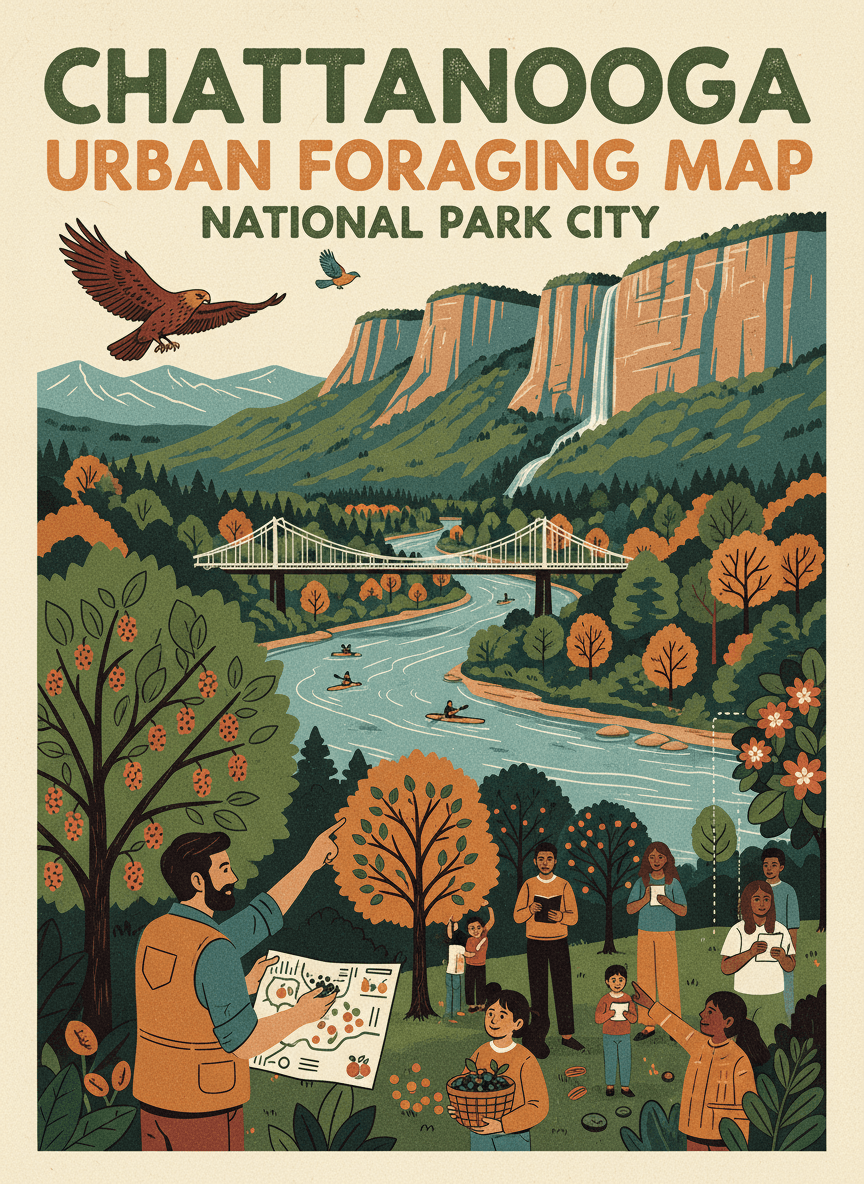
Have you ever been walking down the River Walk and seen an absolute cornucopia of mulberries that only the birds seem to enjoy? Have you ever been strolling through Highland Park in the fall evening and discovered a pecan tree giving out free nuts? We have! And there are probably many more where those came from. There are already apps like iNaturalist that admirably map species within an area. However, we have found their spatial resolution and pictures difficult to use. For this project we will utilize volunteers to contribute to a map of edible fruit trees on public land (and maybe private depending on owner willingness and legal minutia). Details below --- Project: Chattanooga Edible Landscape Map Purpose: Identify and map edible plants across the city to improve food access, urban ecology awareness, and community engagement. Core Features: - public map - citizen submissions - verified plant database - seasonal harvest information Partners: citizens local community organizations urban forestry department --- Minimum Viable Product (MVP) Goals: 1) Map works 2) Community can contribute observations 3) Data quality can be maintained --- Data Model: The primary object is a durable civic record of edible plant presence at a place, with supporting observations, media, and revision history. Tables comprising the dataset: 1) Species - type of edible plant 2) Place - a location 3) Plant Record (*) - the canonical record of a particular plant at a particular location 4) Observation - user contributed records (eg, is it in season? How much was harvested?) 5) Media - photos, etc. 6) Contributors - citizens making observations; curators maintaining records 7) Moderation - publishing observations; managing record changes 8) Change Log - what changes were made; who; when ---- Hypothetical Tech Stack: Data Layer - Postgres/PostGIS Visualization Layer - Vue3/Typescript/Leaflet Hosting - serverless backend via public cloud provider